
With decline in number of fresh COVID-19 cases and easing of restrictions, the country's gross domestic product (GDP) will grow at 8.5 per cent in FY2021-22, according to credit rating agency Icra Ratings. It expects the gross value added (GVA) at basic prices (at constant 2011-12 prices) to grow at 7.3 per cent in FY2022. "The impact of the second wave of COVID-19 and the ensuing state-wise restrictions was seen across a variety of high frequency indicators in April-May 2021.

Manufacturing sector activities in India moderated for the second straight month in July as rates of expansion in output and new orders eased slightly, a monthly survey said on Tuesday. The seasonally adjusted S&P Global India Manufacturing Purchasing Managers' Index (PMI) eased to 57.7 in July from 57.8 in June. Despite the fall, the Indian manufacturing sector maintained strong growth momentum at the start of the third quarter amid ongoing buoyant demand, the survey said.


CPI inflation will remain below the target of 6 per cent set for January 2016.

The Budget should use the extra RBI surplus to better effect, suggests A K Bhattacharya.
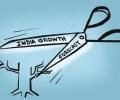
Moody's Investors Service on Thursday slashed India's economic growth projection for 2022 to 7.7 per cent, saying that rising interest rates, uneven monsoon, and slowing global growth will dampen economic momentum on a sequential basis.
The Reserve Bank of India (RBI) on Wednesday raised the benchmark lending rate by 35 basis points to 6.25 per cent in a bid to tame inflation, which has remained above its tolerance level for the past 11 months. With the latest hike, the repo rate or the short-term lending rate at which banks borrow from the central bank now has crossed 6 per cent. This is the fifth consecutive rate hike after a 40 basis points increase in May and 50 basis points hike each in June, August and September.

Rising prices of food items and industrial goods are likely to push inflation to eight per cent in the next six months, much above the RBI's projection of 5 per cent, global financial services firm Nomura has said.

'The rising cost of construction, the cost of doing business, high compliance, and inflation/interest rates going up have already reduced returns to single digits.'

Leaders of several Indian National Developmental Inclusive Alliance (INDIA) parties met on Saturday to take stock of the opposition's preparations leading up to the June 4 counting of votes polled in the Lok Sabha elections, and claimed they will get more than 295 seats, enough for them to form the next government.
Fitch Ratings on Thursday slashed India's GDP growth projection for FY23 to 7 per cent, saying the economy is expected to slow against the backdrop of global economy, elevated inflation and high interest rate. In June, it had forecast 7.8 per cent growth for India. "We expect the economy to slow given the global economic backdrop, elevated inflation and tighter monetary policy. "We now expect the economy to grow 7 per cent in the financial year to end-March 2023 (FY23) from 7.8 per cent previously, with FY24 also slowing to 6.7 per cent from 7.4 per cent before," Fitch said in its September edition of the Global Economic Outlook.

The year 2022 saw the Reserve Bank of India (RBI) start acting on the policy repo rate after a gap of two years. The six-member monetary policy committee of the RBI reduced interest rate sharply - by 115 bps - when Covid-19 struck in 2020. In March 2020, days after the nationwide lockdown was announced, MPC in an unscheduled meeting reduced the repo rate by 75 bps, followed by another 40 bps in May. Status quo was maintained for the next two years since the May repo rate hike.

The Congress on Wednesday said the Supreme Court judgment on certain matters relating to transactions by the Adani Group has proven to be 'extraordinarily generous' to Securities and Exchange Board of India (SEBI) and asserted that the party's fight against crony capitalism and its ill-effects on prices, employment and inequalities will continue.
Arun Jaitley, the leader of Opposition in Rajya Sabha and Bharatiya Janata Party stalwart, in an interview with Business Standard pokes holes in the Budget 2011 and says that the current government is the most corrupt ever . . .
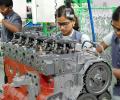
Genset manufacturer Cummins India has seen its share price rise by 45 per cent in the past three months. The management has reaffirmed that growth would be in double digits over the coming two fiscal years. Growth is expected to be driven by a pickup in domestic infrastructure spending.

The ministry sought to allay the rating agency's concerns and said economic growth was on an upward swing.
The good news on inflation continues as the wholesale price index fell for the tenth week in a row to an almost 11-month low of 5.24 per cent for the week ended January 3, prompting the Finance Ministry to project that it would go down to 3-4 per cent by March 31.

The central bank may increase both repo and reverse repo rates by another 25 basis points each in the next policy meeting.
Driven by erratic monsoon and higher global crude prices, inflation is likely to grow by 5.7 per cent in the current fiscal ending March 2006, according to the Centre for Monitoring Indian Economy.

Hikes benchmark lending rate by 35 basis points to 6.25 per cent Cuts growth projection for this fiscal to 6.8 per cent from 7 per cent estimated in September Inflation to come down below 6 per cent in March quarter, to average 6.7 per cent this fiscal

Pre-Budget excercise next month should scrupulously avoid adventurism of all types and refrain from making excessively ambitious projections on revenue and expenditure numbers for 2023-24, suggests A K Bhattacharya.

The Reserve Bank on Tuesday cautioned that continued uncertainty over monsoon could stoke food inflation, but expressed the hope that government policies will improve supplies in the coming months.

All eyes will be on whether Sitharaman will deliver a populist budget leaving more money in hands of the common man or push the reform agenda by staying on the fiscal glide path to lower the fiscal deficit to 4.5 per cent of GDP by 2025-26.
Lenders ask RBI to ensure cheaper credit for infrastructure sector. Banks say while hardening of rates may be required to combat inflation, even a 50 basis point rise could render many projects unviable. In a meeting with RBI, bankers factored in the impact of higher interest rates on most sectors as a part of the inflation management drive but indicated that the government & the central bank should take steps to ensure cheaper credit for building roads, power plants & ports.

Rajan said RBI is in the process of creating a framework which will make the sustainable growth possible.

Growing at a robust rate due to economic reforms in key sectors like digitisation and infrastructure, India has emerged as a star performer and is projected to contribute more than 16 per cent of the global growth, the International Monetary Fund said on Monday. "What we have been observing for quite some time now is that India has been growing at a very robust rate. "It's one of the star performers when it comes to real growth when you look at peer countries.
The Reserve Bank of India said on Tuesday it would accord highest priority to contain inflation within 5 to 5.5 per cent, while keeping its projection for economic growth during 2006-07 unchanged at 7.5 to 8 per cent.

The Reserve Bank of India (RBI) will make its bi-monthly policy announcement next week. The macroeconomic backdrop to this event is perhaps the most reassuring in the past several quarters.

The benchmark Nifty and Sensex could see another 8-10 per cent from the current levels, said HDFC Securities in its outlook for equity markets in 2024. The brokerage said that the market movement in the next year will not be linear, and there will be more volatility. When asked about the market reaction to the General Elections in 2024, Dhiraj Relli, managing director and CEO of HDFC Securities, said more than the outcome of the elections, the market movement in the next three to four months will decide the market trajectory post elections.
The Prime Minister's Economic Advisory Council on Monday projected the economic growth in the country at 8.6 per cent for the current fiscal on the back of rebound in farm output and inflation to come down to 7 per cent by March-end due to declining food prices.

RBI said inflation in the second half of the current fiscal is projected at 2.7-3.2%. It retained its GDP forecast for the current fiscal at 7.4%
RBI Governor Shaktikanta Das on Friday said the government and the central bank are in discussion with South Asian countries to have cross-border trade in rupee. He also said the central bank digital currency (CBDC) is in trial phase and the RBI is moving very carefully and cautiously on digital rupee launch. After the successful launch of the wholesale pilot, the Reserve Bank of India (RBI) on December 1, last year, began its retail CBDC pilot project.

The fast-moving consumer goods (FMCG) sector has underperformed the Nifty over the past year as its 20 per cent return is trumped by 29 per cent of the benchmark index. The FMCG index saw a 2.2 per cent drop in the last session, while the Nifty lost 1 per cent. FMCG is seen as a defensive segment. The demand for staples like personal care products, groceries and snacks tend to be stable. FMCG companies are consistent dividend-payers.

Operating margins have been the primary driver of corporate earnings in India in recent quarters, despite revenue growth suffering from weak consumer demand. Companies across sectors have reported a sharp improvement in earnings before interest, tax, depreciation, and amortisation (Ebitda) margins over the past two years, benefiting from lower commodity and energy prices. Higher margins more than compensated for slower revenue growth, resulting in double-digit growth in net profit for five consecutive quarters.

Lead indicators suggest that domestic current account deficit (CAD) is likely to reduce in 2023, while macro-economic stability has received a boost from inflation being brought back to the official tolerance band, according to the Reserve Bank of India's (RBI's) January 2023 Bulletin. "With the merchandise trade deficit reaching an all-time high of $83.5 billion in a quarter, and a rise in net outgo from the income account, the current account deficit increased to 4.4 per cent of GDP in Q2FY23," the State of the Economy article in the bulletin said. "It is noteworthy, however, that the CAD for Q1 was revised down from 2.8 per cent to 2.2 per cent on account of downward adjustment in Customs data.

Rajasthan Chief Minister Bhajanlal Sharma, state BJP president C P Joshi and Union minister Bhupendra Yadav welcomed them into the party at its state headquarters in Jaipur.

'Rhetoric and chest-thumping are running high on India's recent growth record.'
'But will the giant waves developing elsewhere allow us to sail smoothly into fair winds?' asks Debashis Basu.
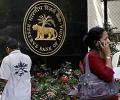
The study points out that for the determination of growth and investment at the macroeconomic level, the real interest rate is more relevant, even though the nominal interest rate is important for investment planning at the firm level.
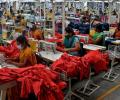
Enthused by higher than expected GDP numbers in the fourth quarter of 2022-23, Chief Economic Adviser (CEA) V Anantha Nageswaran on Wednesday said India's economic growth may exceed the initial estimate of 6.5 per cent in the current fiscal and the country can look for another year of solid economic performance.
